
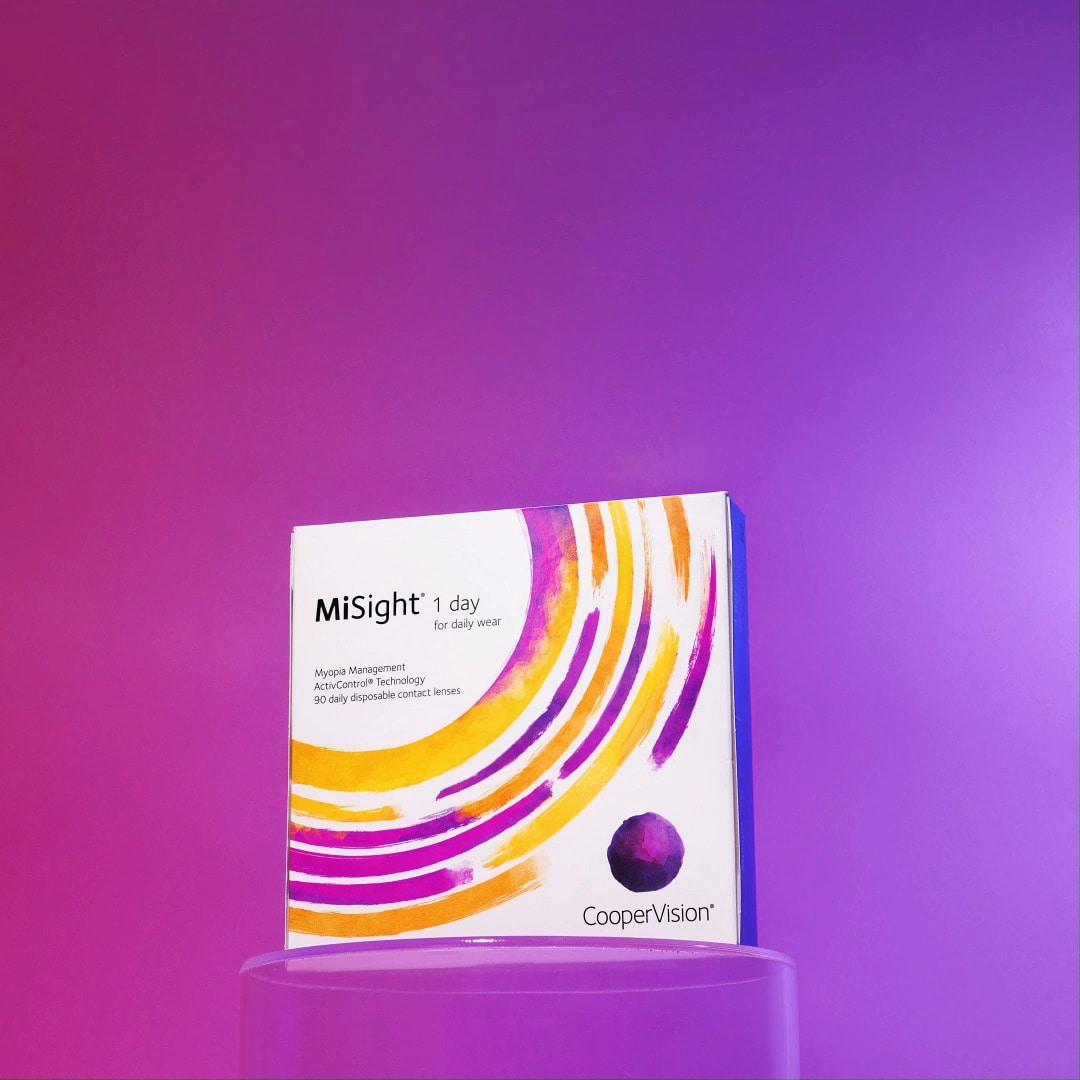
If your child’s nearsightedness keeps getting worse, a stronger glasses prescription may help them see clearly, but it does not necessarily slow myopia progression. For many families, the next question is whether MiSight® 1 day contact lenses could be a good fit.
MiSight lenses are one option within a personalized myopia management plan. The right approach depends on your child’s eye exam, prescription history, lifestyle, and readiness for contact lenses.
How does MiSight help manage myopia?
MiSight 1 day lenses are soft, single-use contact lenses that correct blurry distance vision while helping slow myopia progression in children. A fresh pair is worn each day and discarded at night, so there is no lens case, cleaning solution, or overnight storage to manage.
MiSight is FDA-approved for myopia control in children ages 8 to 12 at the start of treatment. A pediatric eye exam is the best way to determine whether it is appropriate for your child.
When might MiSight be a good option?
MiSight may be worth discussing if your child:
- Has nearsightedness that is getting stronger over time
- Is between 8 and 12 years old when treatment begins
- Can responsibly follow contact lens instructions
- Is motivated to wear lenses consistently
- Plays sports or prefers not to wear glasses during activities
- Has a parent or caregiver who can help establish a dependable routine
A child does not need to manage lenses completely independently from day one. Many families begin with hands-on support at home and build confidence over time.
What will the eye doctor consider before making a recommendation?
Not every child with myopia needs — or is ready for — contact lenses. During a myopia management evaluation, the eye doctor will look beyond your child’s current prescription.
Factors may include:
- Prescription progression: How quickly has nearsightedness changed?
- Eye health: Are your child’s eyes healthy enough for contact lens wear?
- Age and readiness: Can they learn safe insertion, removal, and hygiene habits?
- Daily routine: Can they consistently wear a new pair each day and discard lenses at night?
- Lifestyle: Sports, outdoor activities, school schedules, and personal preferences all matter.
The goal is not simply to replace glasses. It is to choose a realistic plan your child and family can follow long term.
What is the daily routine like?
The routine is simple: wash and dry hands, insert a new pair of lenses in the morning, remove them before bed, and throw them away.
Daily disposable lenses can be convenient for children because there is no need to clean, disinfect, or store them. Still, lenses should never be shared, slept in, or reused the following day.
Your child will receive guidance and practice during their contact lens visit, so they can learn to handle lenses safely and comfortably.
What if MiSight is not the right fit?
MiSight is not the only option for managing myopia. Depending on your child’s needs, the eye doctor may recommend myopia-control eyeglasses, other contact lens options, or atropine eye drops.
Take the next step
If your child’s distance prescription is changing, schedule a myopia management evaluation in Fort Kent. A personalized evaluation can help determine whether MiSight is practical for your family and create a plan to support your child’s vision over time.